The first time I crossed from Lombok to Gili Trawangan, my brain completely switched to “holiday mode”. I remember stepping off the boat, seeing the clear water and the line of cafés along the beach, and thinking only about snorkeling, bike rides, and where to catch the best sunset. No cars, just sandy paths and that easy island rhythm that makes you slow down without even trying.
After a few trips of hopping between Gili T, Gili Air, and Gili Meno, I started to travel a little differently. I still wanted the same fun stuff, of course, but I also quietly paid more attention to things like Gili Trawangan emergency medical support. Not in a stressful way, more like a small checklist in the back of my mind that lets me enjoy the islands with a calmer feeling.
Why knowing about ambulance service actually feels calming
When you look at a map, the Gili Islands are just small dots off the coast of Lombok. That’s exactly what makes them magical. But being on a small island also means you’re a little further from big-city hospitals and busy main roads, and that’s where a reliable island ambulance service in Gili T starts to matter.
Most of the time, your days here are simple: long swims, slow breakfasts, reading a book by the sea, maybe a bike loop around the island. Still, it’s nice to know that if your body needs a bit of extra attention, there’s a clear system that can help you move from the beach to proper care without confusion. For me, that knowledge is one of the things that turns a good trip into a truly relaxed one.
Over time, I’ve come to see ambulance support on the Gilis not as something dramatic, but as part of the same comfort mindset as choosing a good boat company or a well-reviewed place to stay. You hope you never need it, but you feel better knowing it’s there.
Getting to know the team behind the service
During one stay on Gili Trawangan, I noticed the same name popping up whenever people talked about health and safety: Gili Emergency. Their contact details were pinned on a dive shop wall, mentioned by villa staff during check-in, and even saved on a local friend’s phone. When locals all point to the same people, I take that seriously.
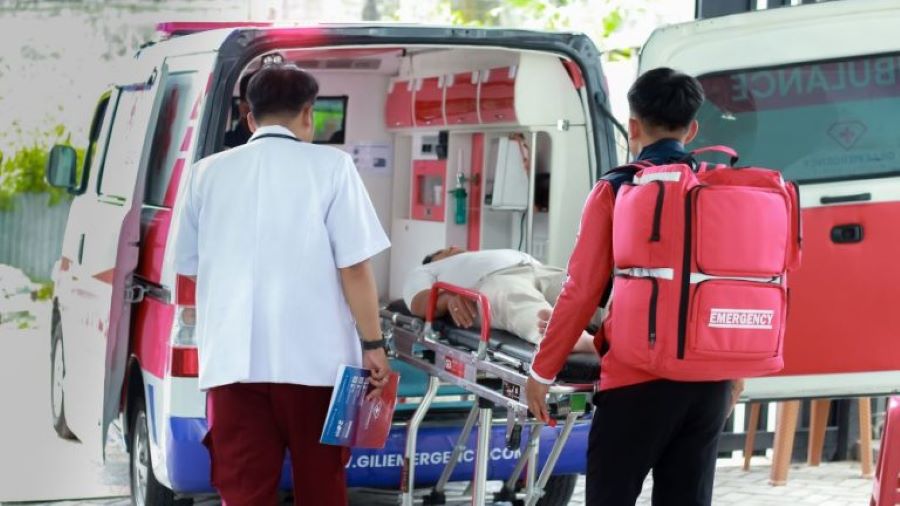
Gili Emergency focuses on making sure visitors have fast, organized help when they need it. They understand how the islands work: the boat schedules, the quiet corners of Gili Meno, the livelier areas of Gili T, and how to coordinate everything between Lombok and the Gili Islands medical transport network.
At some point I realised that Gili Trawangan ambulance service isn’t just a single vehicle or one-time call; it’s a whole system that connects the island with clinics and hospitals in a smooth, planned way. That kind of structure is exactly what you want when you’re far from the mainland, because it means you don’t have to figure everything out in the moment.
What actually happens when you need help
Obviously, everyone’s situation is different, but in general the flow is much more organized than most travelers imagine. It usually starts with a simple call or message. It might come from you, your travel partner, your hotel, or even a dive center if you’re out for the day. The team will ask a few clear questions: where you are, how you’re feeling, and what kind of help you might need.
From there, the 24/7 Gili emergency response kicks in. On a small island like Gili Trawangan, moving quickly is about knowing the best route at that exact time of day: which paths are easiest, how to reach your accommodation, and how to prepare for the next step if you need to go to Lombok. Instead of you juggling different numbers and options, they coordinate everything in one line.
If your situation calls for it, they can arrange an ambulance boat from Gili Trawangan and make sure that on the Lombok side there’s already transport waiting for you. That whole “no wasted time” feeling comes from planning and experience, and that’s what Gili Emergency brings to the table. It’s less about flashing lights and more about smooth movement and clear communication.
While that’s happening, one of the underrated parts is how calm it can feel to have someone explain each step: where you’re going next, who will meet you, how long it will take. When you’re far from home, that kind of steady voice matters a lot.
A smarter, calmer way to explore the islands
Once you know there’s a professional Gili Trawangan ambulance service behind the scenes, the way you enjoy the islands changes in a subtle but very nice way. You can still spend whole days on Gili Air, wander the quiet paths of Gili Meno, or stay out late on Gili T without constantly thinking, “What if something happens?”
I personally like to keep things simple. Before I even leave Lombok, I save the Gili Emergency contact on my phone. Sometimes I send it to whoever I’m traveling with, just so at least two people have it. At check-in, I pay attention for two minutes when staff mention nearby clinics or medical points, and then I go back to thinking about where I’m having dinner.
It doesn’t become an obsession; it just becomes part of my basic travel routine, like making sure my phone is charged or my passport is in a safe place. The goal is always the same: travel light, but travel prepared.
Little habits that make your trip feel even safer
Everyone has their own style of traveling, but if you’re planning to move around Lombok and the Gilis for a few days or weeks, these small habits can help you feel even more comfortable:
- Store the Gili Emergency number under a clear name in your phone, so you can find it instantly.
- Share that contact with your friends or family who are traveling with you.
- Note the name of your hotel or guesthouse and the nearest landmark, so it’s easy to describe your location if needed.
- If you’re heading out for a day trip, just remember which side of the island you’re staying on and roughly how to describe it.
None of this takes more than a couple of minutes, but together they mean that if you ever need Gili Trawangan emergency medical support, you’re already one step ahead. That gives you more mental space to enjoy the actual holiday.
Enjoying every sunset with a clearer mind
In the end, you’re coming to Lombok, Gili Trawangan, Gili Air, and Gili Meno for the good things: the quiet mornings when the sea looks like glass, the bike rides with ocean on one side and little cafés on the other, the easy conversations over fresh seafood, and the way the sky turns gold and pink at the end of the day.
Knowing there’s a reliable Gili Islands medical transport and ambulance system standing by doesn’t take away from that magic; it quietly supports it. It lets you lean fully into the experience, because you’re not just hoping everything will be okay — you already know there’s a professional team ready to help if you ever need them.
For me, that’s the real luxury of traveling smart: you enjoy all the salt, sun, and soft island nights, backed by the calm confidence that Gili Emergency and their ambulance service are part of the island’s invisible safety net, always there in the background while you make your favorite holiday memories.