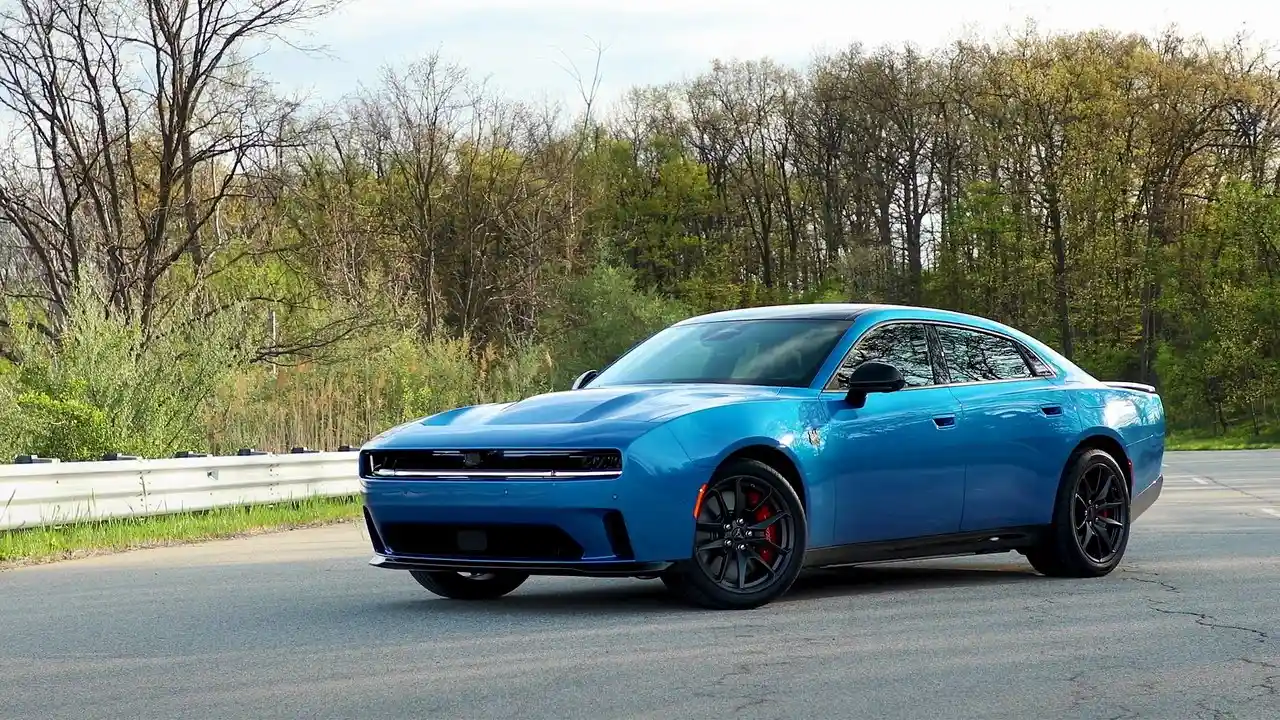
The idea of an electric Dodge Charger once felt impossible. For decades, the Charger name has been inseparable from roaring V8 engines, tire smoke, and raw American muscle. Yet here we are, facing a future shaped by electrification. This 2026 Dodge Charger Daytona review explores whether Dodge has truly managed to translate that rebellious spirit into an all-electric form, or if something essential was left behind.
Rather than quietly changing direction, Dodge chose a bold path. The Charger Daytona is loud in its design, aggressive in its performance claims, and unapologetic about its heritage. The big question is whether that attitude is enough to convince long-time fans.
Design That Refuses to Be Subtle
One look at the 2026 Charger Daytona, and it’s clear Dodge didn’t want this EV to blend in. The wide stance, muscular fenders, and fastback roofline all echo classic Charger cues. At the same time, sharp lighting elements and aerodynamic touches make it obvious this is a modern machine.
The most talked-about feature is the Fratzonic Chambered Exhaust, a system designed to produce an artificial but distinctive sound. While purists may roll their eyes, it shows Dodge understands that sound is part of the emotional connection. The exterior manages to feel both futuristic and familiar, a balance many electric cars struggle to achieve.
Electric Performance With Muscle Intentions
Performance is where skepticism often creeps in, but Dodge aims to silence doubts. Dual electric motors deliver instant torque, pushing the Charger Daytona into acceleration territory that rivals classic muscle cars. The low-mounted battery pack lowers the center of gravity, improving handling and stability at high speeds.
In the middle of this 2026 Dodge Charger Daytona review, it becomes clear that Dodge isn’t chasing efficiency-first driving. This EV is tuned to feel aggressive, with sharp throttle response and selectable drive modes that emphasize performance over range. While it may not behave exactly like a V8, the straight-line speed and cornering confidence deliver a different but still thrilling experience.
Interior Focused on the Driver
Inside, the Charger Daytona blends modern technology with driver-focused design. A digital instrument cluster curves toward the driver, while a large central touchscreen handles navigation, performance data, and infotainment. Physical controls are still present for key functions, which helps maintain a more engaging driving experience.
Materials feel solid and purposeful rather than overly luxurious. Dodge seems to have prioritized durability and performance aesthetics over minimalist elegance. The cabin reinforces the idea that this is a muscle car first, even if the power source has changed.
Range, Charging, and Daily Use
As with any electric vehicle, practicality matters. The Charger Daytona offers a competitive driving range for its class, suitable for daily commuting and weekend drives. Fast-charging capability reduces downtime, making longer trips more manageable.
However, aggressive driving will naturally impact range. Buyers coming from traditional Chargers will need to adjust expectations, planning charging stops instead of fuel fill-ups. This adjustment may be the hardest part of the transition for loyal fans.
Can an EV Truly Replace the V8?
The heart of the debate isn’t performance numbers or design details. It’s emotion. The V8 Charger was about noise, vibration, and drama. The Charger Daytona replaces those sensations with instant power, digital sound, and futuristic feedback.
This 2026 Dodge Charger Daytona review suggests that while the EV cannot replicate the exact feeling of a V8, it offers a new interpretation of muscle. It’s faster in many scenarios, more controlled, and aligned with where the automotive world is heading.
The 2026 Dodge Charger Daytona is not trying to erase the past; it’s trying to reinterpret it. For traditionalists, the absence of a V8 will always feel like a loss. For others, this electric evolution may be an exciting new chapter. As this 2026 Dodge Charger Daytona review concludes, the Charger legacy isn’t dead—it’s just been recharged.